Feeds:
Posts
Comments

I found this LSO video featuring Michael Tilson-Thomas most illuminating:

It’s long, so I’ve tried to summarise the salient features that were helpful to me:

On Debussy:

“Debussy’s music.. is a glorious experience…Debussy was so aware of the possibility of these kind of great vistas of sound that can come out of the piano using the pedal.

… extreme contrasts of sonorities between high & low sounds in the piano.

It’s really the whole world of Liszt & Chopin and all that but just taken to a much further degree.

There’s a whole kind of physical element that’s enormously fun. eg. Similarity to swimming in a marathon race. There’s a lot of crossing of arms, and reaching over, & flailing around hopefully in the neighbourhood of the right notes!

And that gestural sense is transferred to the orchestra. He was a wonderful orchestrator. But he hated to orchestrate. It was very laborious, of course. He much preferred to explore new territory in the actual notes. The gestures of the notes, is where he thought his biggest original contribution was.”

On music: (He referred to the advice he gives young conductors, but I think it applies equally well to any musician or music student studying a work).

“Ask yourself these questions:

1. What is happening? (phrase structure, melody, harmony, etc etc)

2. Why is it happening? To what purpose is it happening?

3. And what does all of this mean to YOU in particular?

4. What are you gonna DO about it?”

On the boundaries between the solo repertoire, chamber music and the orchestra:

“It is my big mission in life to convince all musicians, very much young musicians, that they must not check their identities as soloists and chamber musicians at the door when they come in to play in the symphony orchestra. They must fiercely hold on to those things even though of course it is much more difficult to achieve those sort of values with as many people as are in an orchestra. But that’s really what makes it fun, and I think it’s the most inspiring thing for the public rather than having a maestro who’s flailing around and people are sort of following or not.”

On good orchestral playing and music-making:

“When you sense that everyone in the orchestra really understands the music and is “in” on all of the “inside story” of the piece, and all these very elegant things are clearly seen in the listening and the reactions to one another to what’s going on in the orchestra… I take the greatest pleasure in that, both as a listener and as a performer; it’s what I try and encourage.”

On the importance of breathing, and the breath, in music:

“One of Piatigorsky’s great lessons [I was accompanist in his (and Heifetz’) class for some years]: ‘If you’re wondering where you should come in, .. breathe and then play.’

The expression of the phrase is already determined by the breath.”

I found it interesting that MTT made references to Skype, the internet and modern technology as teaching tools as well, which by sheer coincidence I had just been talking about a few hours before I watched this video! I can’t help thinking that with all the new friends recently made, for example in the Mahler Chamber Orchestra among others, it shouldn’t be logistically too difficult to arrange masterclasses over Skype on an ongoing basis. One could hook up the computer image to a projector and screen and a good stereo sound system, and a good microphone as well, of course, and it would be possible to be up and running.

Will our internet connection permit it, though? Well, all these things can be ironed out. But the fact is that this CAN be done! 

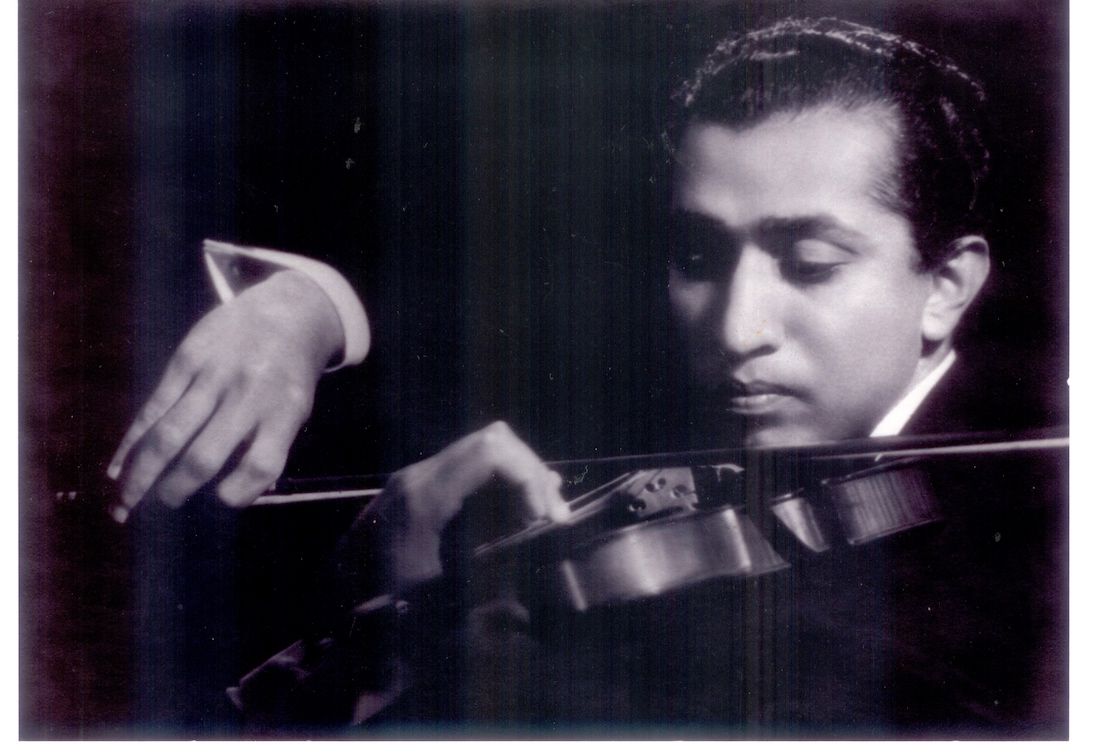
It is with great sadness that one learned of the tragic death of this young Hungarian violinist in the cruise ship Costa Concordia disaster off the Tuscan coast of Italy on 13 January.

The first intimation about his demise was in the local press on 21 January 2012 as the cruise ship had several crew members from Goa on board. One of the survivors, Kevin Monteiro from Agonda, was quoted as saying that a “musician returned to the ship’s corridor to retrieve his violin but never came back alive”.

I am a subscriber to violinist.com, where I got more details. According to news reports, he was the first identified victim. Several sources confirm that he helped crying children into their life-jackets and was himself wearing one when he returned to his cabin to salvage his instrument.

Here is a video uploaded on Youtube just a month earlier in which he applies for a violin teacher’s job:

He graduated in 1998 from the Franz Liszt Academy of Music, where he was the pupil of László Dénes.

Rest in peace,  Sándor Fehér!

P1270445-1

Hadar Rimon, violin

Natasha Tadson, piano

In Hebrew, “Hadar” means “beautiful”, “ornamented”. As descriptions of Hadar Rimon’s concert performance at the Kala Academy on 23 January, even these are not flattering enough. In a world where superlatives are resorted to so readily, how does one describe in words what one feels in the presence of something truly outstanding, to the extent it occupies a league all its own?

The slow assured chordal introduction to Beethoven’s Kreutzer sonata was the first clue of this young artist’s superb command of her instrument and her musicality. And Tadson’s response also indicated her own formidable presence at her instrument. In the stormy Presto that soon followed, there was concerto-like interplay which made huge demands upon both. From here, through the delightful Andante con variazioni to the final Presto of this monumental work, we heard not only instrumental playing of the highest possible order from both, but also the long-standing intimate camaraderie between this daughter-mother duo, born of long years of making music together.

The Kreutzer alone might have served sufficient for the first half of Rimon’s concert programme, but she returned to deliver an absolutely stunning account of Giuseppe Tartini’s “Devil’s Trill” sonata in G minor. This was allegedly written after the Devil appeared to the composer in a dream and played on his violin for him, and the composition was Tartini’s frantic attempt to write down what had been played. Whether or not one believes the tale, this is even today famous for its Herculean challenges for the violin. Rimon played the devil’s music like an angel! The beguiling rich tone in the introduction, the hairbreadth-perfect intonation, double- and triple-stops played with tight-rope precision, the clean trilling, — all this played with laser-beam concentration, were an ecstatic delight to grateful ears.

The second half began with Sergei Prokofiev’s Sonata for violin and piano no. 2 in D major, op. 94a. This is a flute sonata arranged for the violin at the request of his close friend David Oistrakh, who felt it “ought to live a richer and fuller life on the concert stage”. Extremely generous of Oistrakh who as a teenager was berated by Prokofiev for a “substandard” playing of his violin concerto! George Bernard Shaw who was also a music critic, described this work as a “humorous masterpiece of authentic violin music”. Although the piano part has remained the same, the editing for violin is very little, with some added double-stops and bowing articulation. This “neoclassical” composition was a wonderful showcase for Rimon’s voluptuous violin tone. One could well imagine the flute flourishes in the warm lyrical theme that opened the work. One heard shades of Peter and the Wolf, especially in the cheerful march-like melody in the last movement. Rimon was partnered rather than merely supported by Tadson in this beautifully evocative composition.

The last work could be regarded as a lengthy encore showpiece: an opera fantasy for violin, based on themes from Bizet’s Carmen. The offerings by Sarasate and Waxman are part of the standard violin repertory, but this Carmen: Fantasie brillante, op. 3 no. 3 by Hungarian composer Jenö Hubay certainly is a neglected gem. It is a credit to Bizet and his runaway- successful opera Carmen with its barrelful of catchy tunes and its heady mix of love, drama, and jealousy, that it caught the imagination of so many composers, especially for the violin. This composition begins dramatically with the Fate theme and its portent of doom, and works its way through every violin pyrotechnic device in the book to a barnstorming finale. Particularly noteworthy was the March of the Toreadors picked out at the piano, while Hadar’s violin knitted an intricate tapestry around it, replete with harmonics, multiple-stopping and passagework played at the speed of light.

Tadson’s accompaniment was rock-steady throughout, and despite the absence of a page-turner she skipped neither beat nor note even in works like the Kreutzer with its share of repeats, and the most awkward page-turns as in the Prokofiev.

The ground certainly shifted for us that evening of young Hadar Rimon’s concert. In my thirty-odd years in Goa, I can honestly say I have never heard a violinist of this calibre ever perform here before. This is the stuff of legend, and those who gave her concert a miss are immeasurably the poorer for it.

(An edited version of this article appeared in the Navhind Times Goa India on 26 January 2012)

P1270435 cropped

Henja Semmler and Christian Heubes, violin

Anna Puig Torné and Delphine Tissot, viola

Antoaneta Emanuilova, violoncello

Olivier Patey, clarinet

As closing acts go, it might be hard to top the Mahler Chamber Soloists, the chamber ensemble derived from the prestigious Mahler Chamber Orchestra (MCO). As their information brochure says, “the term ‘chamber’ refers less to the size of the ensemble than to the chamber music approach to orchestral playing shared by all MCO musicians”.

This approach was made amply manifest from the opening work: Antonin Dvořák’s Terzetto in C major op. 74 for two violins and viola (Semmler, Heubes and Tissot). This is a composition with a fair helping of local Bohemian colour, and we heard some gloriously expansive and passionate playing here. The first movement is gently lyrical, and the players seemed to revel in its subtleties, savouring every inflection and nuance. It segued seamlessly into the glowingly reflective Larghetto, which had the feel of an ardent love song. The third movement, Scherzo (a signature Dvořák furiant dance), a fiendish minefield of crossrhythms and accents, with a gentler central Trio was delivered with verve and flamboyance. The last movement of this Hausmusik work, a delightful Theme and variations brought the work to a bracing close.

Mozart’s String Quintet in G minor KV 516 is a “viola” quintet in that it is scored for string quartet and an extra viola. Typical of a lot of his G minor compositions, the mood is dark and melancholic. Here the MCO soloists really came into their own. This was playing of the greatest stylishness, keenly alert to the expressive power of even the smallest details. The opening Allegro pulsated with brooding energy, and when all instruments came together at the first transition, it was a veritable explosion of sound that seemed to come from much larger forces. The comfortable rapport between the players was visibly and aurally evident, as they negotiated the harmonic twists and chromatic turns in a cascade of ideas and developments arising from the simple ascending minor triad that began the work from Semmler’s violin. The musical tension persisted in the Menuetto, only diminishing a little in the trio section. The third movement (Adagio ma non troppo) on muted strings was particularly remarkable for its sense of timelessness, almost deliciously suspended in mid-air. The last movement (Adagio-Allegro) has been described by Mozart biographer Hermann Abert as reminiscent of Tamino and Pamina being put through “oppressive darkness before emerging into the light.” And when the work ended in a glorious major key, it seemed like the sun had suddenly appeared through a very gloomy overcast sky. In the hands of the MCO soloists, this was ‘the music of friends’ par excellence; quite simply the kind of playing that makes one grateful to be alive to hear it.

P1270441

The last work on the programme was Brahms’ clarinet quintet in B minor, op. 115. It is an autumnal composition, apparently inspired by the prowess of clarinettist Richard Mühlfeld (whom Brahms nicknamed ‘Fräulein Klarinette’) and widely regarded as one of the most beautiful of all Brahms’ chamber pieces. Patey is a wonderfully sensitive player, and was well-supported by the string quartet in this contemplative work. We were drawn into Brahms’ unmistakable sound-world from the very opening melody in thirds from the violins, then the syncopated accompaniment from the lower strings, and when Patey’s clarinet ascended through this tonal texture with an impassioned response from the cello, it was the beginning of another glad-to-be-alive experience that stayed with us through this truly gorgeous work. The second movement was particularly memorable for its evocation of the cimbalom on muted strings, with the clarinet melody wafting above this sound-cloud. The work seemed to end on a note of poignancy, sadness even? When the MCO players emerged, spent, to applause, it was clear that they had given it their all.

The encore was a surprise: an absolutely charming arrangement of the traditional Konkani song “O Rosa” by our local talent Roque Lazarus and Rui Lobo, and played with real relish by all six. A rosier end to such a performance couldn’t have been more appropriate.

(An edited version of this article appeared in the Navhind Times on 25 January 2012)

Hadar Rimon - Violinist

Israeli violin virtuoso Hadar Rimon is on a concert tour of India. Music lovers in Goa have the unique opportunity to hear her on 23 January 2012 at 6.30 pm at Kala Academy (Donation passes available at Furtados Music). She discusses her life and career with Dr. Luis Dias in an exclusive interview.

Welcome to India, Ms. Rimon!

Thank you very much. My mother and I are very excited, and looking forward, to our concerts in India.

You’ve been playing the violin most of your life. How did you choose your instrument at such a young age? Were you tempted to play piano, like your mother?

I started playing the violin when I was 5 years old. My mother’s classmate from the Gnessin School of Music in Moscow immigrated to Israel, and while she was looking for a permanent violin teaching position at one of the music conservatories in Tel-Aviv, she offered my mother to start teaching me violin, and thus I became her first violin student in Israel. My mother agreed mostly because she thought I would help my new teacher to learn Hebrew faster, but as a result, I speak fluent Russian, and also play the violin. I always heard my mother play the piano, since I can remember myself, and admired it so much, but since I was introduced to the violin I had no doubt in my mind, that I want to play the violin.

At what age did you decide that you wanted to make music your career?

I guess since the moment I started playing.

Describe to us how music education is imparted to children and youth in Israel.

[Our youth in India suffer hugely from a lack of this infrastructure (music education), despite the fact that there is a lot of talent. The problems are many: not enough exposure to concerts, poor instruments, too few good teachers. So we end up having a few pockets in the country where some of our youth (very very few for a country with a population of over a billion!!) are trained to a somewhat decent level, but it's too little, and it happens too late in their lives as mainstream education interferes as well. I sometimes despair about this. So the question 3 is an attempt to try and study how music education is structured in the West, and hope that by publicising it that something will soon be done to correct this. We have so much money in India now, but currently no will to invest in western classical music. I'm hoping that by writing about it, that the right people might start thinking about investing in it e.g like the Buchmann-Mehta school].

Classical music is indeed a universal cultural value, which can be a common language to a big part of our world, and therefore bringing as many people as possible to the world of classical music is extremely important. In Israel there exists an educational infrastructure for classical music, starting with good teachers (new immigrants from Russia, and others), conservatories, art schools which enable children who play music to develop, and also music academies – The Buchmann-Mehta School of Music in Tel-Aviv University, and the Music and Dance Academy in the Hebrew University in Jerusalem. In Israel, take place many classical music concerts in different places which include recitals, chamber music, and concerts with big orchestras, such as the Israel Philharmonic Orchestra under the leadership of Maestro Zubin Mehta. The way to bring the youth closer to classical music is through education of the children and their parents to classical music, training of good teachers, the creation of places with good conditions such as music schools, good instruments, suitable concert halls, and to provide awareness of the importance of the culture of classical music.

You’ve had several teachers, and attended many masterclasses with great violinists (Ida Haendel, Shlomo Mintz, Leonidas Kavakos, Zakhar Bron). Is there a particular favourite or idol you have? If so, why?

All the wonderful teachers and musicians, I have had the pleasure of working with, inspired me in many different ways, and each and every one of these experiences where interesting and helpful, but the one who had the most profound impact on my professional development is most definitely my encounter with Professor Zakhar Bron in Master Classes during my studies at the Buchmann-Mehta School of Music. Professor Bron is such an incredible musician and teacher! Since 2008 I have had the privilege of becoming his student at the Zurich University of the Arts. Every lesson with him is a new adventure full of new information, his insisting on precision in every technical detail, combined in the most harmonic way with the profound interpretation of the music, always amazes me, and I am truly grateful for this amazing opportunity to be his student.

You’ve studied at the Buchmann-Mehta School of Music in Tel Aviv, of which Maestro Zubin Mehta is co-founder. Have you ever had the opportunity to meet with him?

Yes, I have had the honour of meeting Maestro Zubin Mehta. Actually, the first time I met him was at the main corridor of the Buchmann-Mehta School of Music. He was walking around the school, and to my astonishment he walked up to me and called me "little Natasha". I have no idea how, but he recognized me as my mother’s daughter, since he knew my mother from a very early age, and heard her many times during her career. Later, during my studies at the Buchmann-Mehta School, I have had the privilege to play in the school’s orchestra which often plays under the baton of Maestro Mehta. I think the most unforgettable and moving experience for me was, our orchestra concert at the United Nations in New-York for the International Holocaust day, where Maestro Mehta conducted the Beethoven fifth Symphony.

On an average, how many hours of practice do you put in daily? Could you describe how you practice e.g. do you spend a lot of time on scales, arpeggios, octaves, etudes? How do you warm up?

It is hard to know, because I usually don’t count, and also it changes depending of the situation, if I have other classes, lectures, papers to write, rehearsals or concerts, due to my studies in an academic institution. But I think around 6 hours. In extreme situations such as competitions it could go up to 10 hours as well, but rarely. When practicing, I usually don’t play scales, unfortunately, but this is a bad example, because it helps a lot to do so, but usually there is so much repertoire to learn and not enough time, so I mostly practice the pieces I have to perform at the moment in a concert, exam, or a preparing for a competition. Regarding warming up, I kind of don’t, it happens gradually while I start practicing one of the pieces, again bad example, but it works for me.

You’ve got a very exciting concert programme lined up for us! Beethoven’s Kreutzer sonata, Tartini’s Devil’s Trill, Prokofiev violin sonata op. 94a, and Hubay’s Carmen Fanstie brillante. Any thoughts about your choice of works?

We wanted to have a colourful programme, with variety of different styles, and also of course we love these pieces very much, and we hope the audience will share our passion for them.

You’re in your mid-twenties, and have already performed as soloist with respected ensembles such as the Israel Philharmonic Orchestra. How old were you when you played with them? What did you play? Was it a daunting experience?

I think I was twenty years old at the time I played with the Israel Philharmonic Orchestra. I played one of the solo parts in the Vivaldi Concerto for 4 Violins. It was a wonderful experience, and a dream come true, to play with this orchestra at the Mann Auditorium. I was very nervous, but I played with two of the principle violinists from the orchestra itself, and they were very nice and reassuring, so it was really lovely.

At all concert recitals, you are accompanied by your mother. What is that like? Does the mother-daughter connection sometimes get in the way when you rehearse or perform? (I know a sister duo violin-piano who tell me they fight all the time while rehearsing!)

On that matter, I must say that I feel so extremely lucky to have had the opportunity to play with such an amazing musician such as my mother, from the very beginning of my studies and until today. We are like one person in music, we feel each other and respect each other while working and playing together. I honestly adore playing with my mother, and always feel a strong connection between us while practicing and performing.

What advice do you have for young children, teenagers, adolescents studying the violin, or music in general?

My advice is to find the best and right teacher for you, the one who will teach you everything you need to know from the basic technique to the highest level of music-making but at the same time will let your individual qualities to shine through.

And of course, practise as much as possible!

(An edited version of this article appeared in the Navhind Times Goa India on 16 January 2012)

VID00084

Sanya Myla Cotta, Goa’s violin wizard was recently in Goa for the Indo-German Confluence-2 Musikfest. She spoke to Dr. Luis Dias about music and her plans for the future.

You started violin quite young in life. Given that your dad is a guitarist, why did you choose the violin?

Good question… At that age I just wanted to be able to play something. I did start off with a small guitar, but somehow it didn’t work out. I didn’t like the sound I was producing from it. So we moved to a proper violin and lessons with Renata Bruce-Webber which continued until we returned to Goa when I was 12. Then of course, I studied here in Goa with Myra Shroff until I went to study further in Nuremberg, Germany.

And now, six and a half years later, what do you aspire to be: an orchestral player, chamber musician, or a concert violinist?

I think it’s important to have a combination. I enjoy being an orchestral player the most. And here I’ve been playing some solo repertoire. I do enjoy chamber music too: I had a quartet before, and now I’ll be doing some violin duos. Before that, I played a lot of violin-viola duos as well.

What about teaching?

I did a pedagogy degree as well. I’ve taught almost three years at a music school. I enjoy that too. I like working with children. But I don’t think I could do it full-time.

Somewhere on the cards, do you think a return to India is possible?

I hope so! (laughs). It’s difficult to say, of course, but that was always the plan. My teacher was also encouraging of that, that I come back and make a difference. I can’t imagine myself just playing thirty years in an orchestra there and not having made a difference here.

But what about you as an individual: what would happen to your own musical nourishment in terms of the vibrant concert culture you have there?

It depends on oneself as well. If you want to make it work, it will. It’s difficult now, but I’m confident that things will improve. They are already improving.

It might be more prudent for you to first have your fill of your career there, returning here during your holiday breaks…

At the very least!

And then perhaps decide to return more permanently.

Yes.

Tell us a little about the virtuoso course you’ve been chosen for.

It’s Meisterklasse. It’s a postgraduate degree that I’ve secured, with Prof. Ulf Klausenitzer in Nuremberg.

What are your immediate plans?

Right now, I’m already interning at the orchestra of an opera house, Hessisches Staatstheater, which is valuable work experience. It’s for a year, and I’ll soon be auditioning for a job in a professional orchestra.

We in Goa wish you all the very best, Sanya!

(An edited version of this article appeared in the Navhind Times Goa India on 24 January 2012)

P1270122

Ulf Klausenitzer and Hartmut Krause, violins

Rüdiger Clauss, violoncello

Lin Lin Fan, piano

The concert on 16 January at the Kala Academy flagged off a week-long Musikfest celebrating 60 years of Indo-German friendship and the golden jubilee of Goa’s liberation.

It is a curious oddity of history that that trio-sonata, once the most common chamber-music form of the 17th and 18th centuries, should be so neglected today. Hearing two of them in short order, was therefore, a rare treat.

Despite a tenuous beginning, the ensemble quickly rallied to deliver an engaging account of Gluck’s Trio-sonata no. 5 in E flat major for 2 violins and continuo (provided here by piano and cello). It certainly gave the lie to contemporary Handel’s catty remark that his cook knew more counterpoint than Gluck!

This was followed by a trio-sonata in C major for the same forces, hitherto spuriously ascribed to J.S. Bach (and entered in the Schmieder catalogue as BWV 1037) but now thought to be composed by Johann Gottlieb Goldberg, his pupil. Nevertheless, the nod to the master is evident, with the opening theme reminiscent of the famous Air on the G string, and the jolly Gigue called to mind the last movement of Bach’s A minor violin concerto. Could master and pupil have worked together to write this charming work?

Both trio-sonatas were a little bottom-heavy, with Clauss’ cello rather overpowering in places. A harpsichord in place of the piano would have given better “fish-bone” (Klausenitzer’s analogy) stylistic articulation as well.

Clauss’ cello sang with a warm, rich sonorous tone in Tchaikovsky’s Nocturne Op. 19 no.4. Chabrier’s Habanera was a good example of the obsession French composers of the time had with Spain. It was rendered here by Clauss and Fan with great flair and charm.

Bohuslav Martinů’s Sonatina for 2 violins and piano was written in 1930, and seems to reflect some of the restlessness and angst of the Depression years, especially in the first movement. The pizzicato punctuation of melodic phrases in the third movement had a touch of wit and humour about them.

Last on the menu, we had two movements from Shostakovich’s Five Pieces for 2 violins and piano. The first, the Prelude, was played with much passion, feeling and sensitivity. The melodic lines from the two violins virtually cavorted across the auditorium in the playful Polka.

The encore was the fourth movement (a Waltz) from the same work by Shostakovich.

It is a pity that sound-bleeds continue to occur into the Dinanath Mangueshkar indoor auditorium of the Kala Academy during performance. This exquisite concert was marred by the din from the Lokutsav in the outdoor parking lot. Certainly with some planning, one can ensure that this doesn’t happen again.

(An edited version of this article appeared in the Navhind Times Goa India on 17 January 2012)

Untitled 0 00 26-07

Virtuoso sopranos can be like buses in Goa: you wait for ages for one to come along, and suddenly three of them appear all at once!

The concert was billed as “The Stunning Stratospheric Sopranos”, a tongue-in-cheek nod to the Three Tenors phenomenon, which took the world by storm at the 1990 World Cup in Rome. And they didn’t disappoint in either the Stunning or the Stratospheric department.

The programme was thoughtfully laid out, to span the gamut of the operatic repertory, from Händel to Gluck, Mozart, Gounod, Delibes, Johann Strauss II, Bizet, Dvořák, Massenet, and Puccini, through to modern-day British composer Jonathan Dove. It had mushy lovelorn soliloquies, studies in flirtation, joie de vivre, fire-and-brimstone wrath, coloratura pyrotechnics, heartmeltingly beautiful duets: in short everything that a soprano’s handbag of tricks or indeed opera itself could possibly contain.

The curtain rose with two arias from Händel’s ‘heroic’ operas (Alessandro, and Cleopatra). While Susanna Hurrell’s opening aria (Brilla nell’Alma) was a dazzling display of technical wizardry, Joanne D’Mello’s aria that followed was delivered with a silky smooth vocal line, as she (Cleopatra) “lamented her fate”, shorn of her queendom and possibly her love, in one cruel blow.
The duet Canzonetta sull’Aria from Mozart’s The Marriage of Figaro was made famous in the film Shawshank Redemption. As Patricia Rozario and Joanne D’Mello sang it, one was reminded of the words of Morgan Freeman’s character from the film: “I’d like to think that they were singing about something so beautiful it cannot be expressed in words, and it makes your heart ache because of it. I tell you those voices soared higher and further than anybody dares to dream”.

Word-count constraints do not permit one to do justice to the whole programme, and it is difficult to cherrypick highlights for particular mention in such a top-drawer performance. But certainly Rozario was the Queen of the Night in more ways than one in Die Hölle Rache from Mozart’s Magic Flute, with its staggering succession of near-impossible high notes and overall technique that had you on the edge of your seat. Another absolute showstopper was her “It’s MY wedding”, from Dove’s “Enchanted Pig”, with its brilliantly clever marriage of witty lyrics and fast-paced, taut scoring. Her Song to the Moon from Dvořák’s Rusalka amply showed off her beauty of tone.

The Flower duet from Delibes’ Lakmé gained international fame after British Airways appropriated it as their signature tune. Hurrell and D’Mello (as Lakmé and Malika) were in full flower as their voices blended like the jasmine and rose in their lyrics.

Hurrell’s taunt of the Marquis in the high-spirited Laughing Song from Johann Strauss II’s Die Fledermaus was another high point, with its very skilfully translated English lyrics that preserved all the irrepressible Viennese gaiety from its original setting. Hurrell’s command of technique is quite phenomenal. Here’s hoping we will hear her again in Goa very soon.

Ah, Joanne D’Mello! Every single time she returns to the Goan stage, she sounds even better than before. Her voice has a unique tonal quality; this was evident from the beginning. But this is now coupled with ever-growing maturity and insight into everything she sings, and one cannot help but feel that great things are in store for her.

And a word must be said for the unflappable Mark Troop, who worked like a trooper at the piano right through, far more than mere accompanist but rather a partner of high artistry and sensitivity.

Troop’s arrangement of the dulpod “Hanv saiba poltoddi vetam” for three voices and piano was a fitting encore as it ferried the audience gently across, after a truly magical evening by the Mandovi riverbank.

(An edited version of this article appeared in the Navhind Times Goa India on 6 January 2012)

Joanne D'Mello High Definition 1 

Goa’s classical singing sensation Joanne D ’ Mello is in Goa in the run-up to the Stunning Stratospheric Sopranos, a virtuosic programme celebrating the female voice, on 4 January 2012 at 7.15 pm, Kala Academy (Tickets available at Furtados Music). She spoke to Dr. Luis Dias about the upcoming concert and about music in general.


Welcome back to Goa, Joanne! You’ve certainly gone a long way since you left our shores. Do let us know your career path since then.

I started studying music full-time in 2007 at the Royal College of Music in London under the expert guidance of Patricia Rozario. Since then I have been busy performing all over London and other parts of England. I’ve sung in some operas as a soloist and in the chorus, been a soloist for various concerts and have even appeared twice on BBC for their series called Song of Praise! Currently I am based in Belgium at the Flanders Operastudio in Ghent where the focus is the Operatic Repertoire but we also have masterclasses on the German lieder repertoire.

Are you excited to be back as a performer? Any thoughts about the programme?

I am thoroughly pleased to be invited to perform on this concert tour with my teacher Patricia Rozario. It’s a huge honour for me to share the stage with my teacher- someone I have great respect for and admire hugely.

The programme will consist of some of the greatest operatic repertoire written for sopranos. Solos, duets and trios. We will be covering repertoire from the Baroque period to the Romantic. Composers like Handel, Mozart and Gounod will be featured and we will be singing in Italian, French, German and English.

We’d love more of our youth to follow in your footsteps. Any advice (apart from the ‘Giving Voice to India’ series begun by Patricia Rozario, of course)?

I hope this concert will give our audience a taste of the wonderful western classical repertoire and encourage them to listen to it more. Since it is not generally part of the sound world we are used to, it takes some time to cultivate a taste and liking for it. But once you’ve acquired it, it will grow into a passion that will give you much pleasure for life and can never be taken away from you. Those who have the privilege of studying it, should know that listening to as many performances of other artists is very important.

Singing students in India are very lucky to have Patricia Rozario visiting thrice a year to conduct voice workshops. I would highly recommend making the most of this opportunity.

What should we, as parents and as a community, be doing to detect and develop vocal talent at the outset? 

I think Singing is one of the most healthy activities a student can occupy themselves with. There is such a wealth of choral repertoire, sacred and secular that can be sung by all voice types. It is important for young people to start off by having a chance to sing out in a group, so there is no chance of feeling shy or nervous. Some of my happiest memories are from singing in my school choir conducted by Jean Kalgutkar and then in the senior choir at the Kala Academy. I have always enjoyed singing in choirs in church, school and college. It’s the best way to start learning to read music too. There is safety in numbers so it is not too daunting for young people to try out. I think parents should encourage children to join choirs, regularly attend practice and always have good quality music played at home.

(An edited version of this article appeared in the Navhind Times Goa India on 3 January 2012)

Susanna Hurrell

British soprano Susanna Hurrell is in Goa in the run-up to the Stunning Stratospheric Sopranos, a virtuosic programme celebrating the female voice, on 4 January 2012 at 7.15 pm, Kala Academy (Tickets available at Furtados Music). She spoke to Dr. Luis Dias about the upcoming concert and about music in general.

Welcome to Goa, Ms. Hurrell! Is this your first visit here?

I’ve been to India before but never to Goa so I’m very excited about exploring a new place!

You’ve studied with the renowned soprano Patricia Rozario, haven’t you? Tell us a little more about your career path.

I started studying with Patricia at the Royal College of Music in London in 2007 and since then have gone onto the prestigious opera course at the Royal College and then the National Opera Studio which takes only twelve singers each year from all over the world. I am lucky to have won several awards and am also working as a professional singer alongside my studies. Next year I will take part in major competitions and audition for roles in English opera houses.

Any thoughts about the concert programme?

We’ve chosen a huge variety of famous operatic arias that show off the different qualities of our voices. Some of them are slow and beautiful and others are fast and fun so we hope you enjoy the mixture!

Any advice for our youth? What should we as parents, and as a community be doing to ensure that talent is detected and developed as early as necessary?

To young singers I would say it’s a long road to success! You have to be patient and work slowly and meticulously, until the muscles get strong. What we do is like training to be an athlete so you can’t expect to be the best immediately, but if you persevere and focus it’s really worth it in the end. For parents my advice would be to find the right teacher for your child. This is essential if the voice is to be developed as well as it could be, so make sure they study with someone who really knows what they’re doing. By the time the child reaches 16 to 17 it becomes clear if they have a nice sounding voice so encourage them to take it further, and find plenty of performing opportunities such as in a local drama group so they get used to working on the stage. There are fantastic careers in classical music all over the world and opportunities are beginning to arise in India too, so now is a great time for young Indian singers to get out there and be heard!

(An edited version of this article appeared in the Navhind Times, Goa India on 2 January, 2012) 

Older Posts »

Follow

Get every new post delivered to your Inbox.